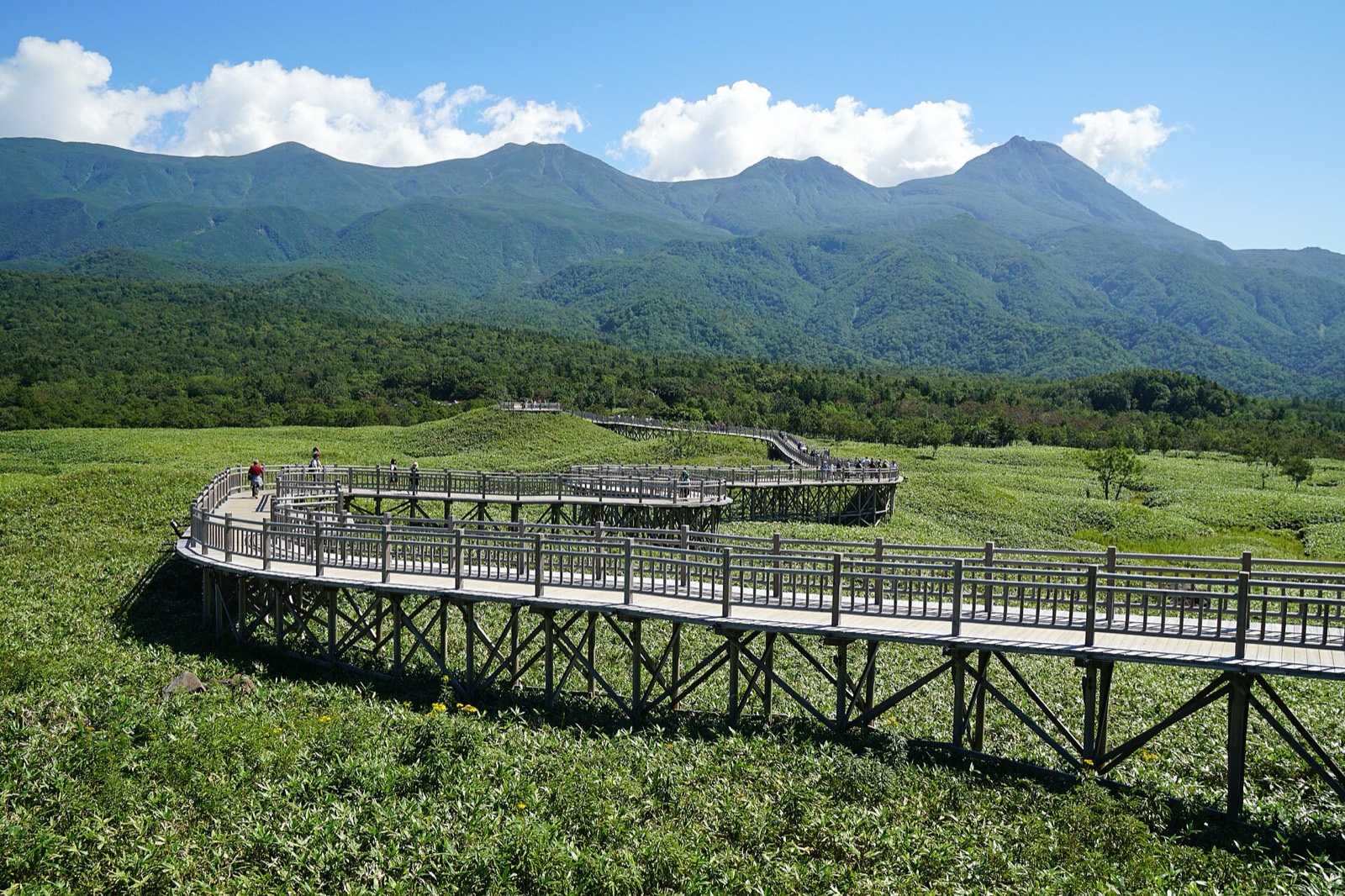
At the far northeastern corner of Hokkaido, a knife of volcanic mountains runs fifty kilometers into the Sea of Okhotsk. There is one road up each coast, and both of them give up before the tip. Beyond that, the peninsula belongs to the bears.
This is Shiretoko — from the Ainu sir etok, often translated as "the end of the earth." It became a UNESCO World Heritage site in 2005, and it is the closest thing Japan has to true wilderness.
Why the ice matters — the thing that makes Shiretoko World Heritage
Most visitors arrive for the bears and the scenery. The reason UNESCO listed the place is harder to see from a viewpoint, and it's the most interesting thing about it.
Shiretoko sits at the southern limit of seasonal sea ice in the Northern Hemisphere. Every winter the Sea of Okhotsk freezes and pack ice presses against this coast — and that ice is not just spectacle. As it forms and later melts, it drives an enormous bloom of plankton in the spring waters. Plankton feeds fish. Fish feed salmon. Salmon run up these short, steep rivers in autumn — and are eaten by brown bears, foxes and eagles, who carry the carcasses into the forest, where they decay into the soil that grows the trees.
So the food chain here runs unbroken from drifting ice to old-growth forest, and you can watch most of the links from a boat. That tight coupling of a marine and a land ecosystem, still intact, is the reason for the listing — not the scenery, though the scenery is the reward.
It also explains the seasons. The ice in February isn't a separate attraction from the bears in September; it's the same system, six months apart.
Know your two coasts
Shiretoko is really two destinations sharing a mountain ridge, and choosing between them shapes your whole trip.
The Utoro side (northwest, Okhotsk Sea) is the tourist gateway: hotels and onsen, the Five Lakes, waterfall walks, the Nature Center, and the famous sunset over the sea. Most first visits are based here.
The Rausu side (southeast, Nemuro Strait) is a working fishing coast — rougher, quieter, and the launch point for the peninsula's best marine wildlife: sperm whales and orcas in summer, Steller's and white-tailed sea eagles on the winter ice.
The Shiretoko Pass road links the two sides in about thirty minutes, with Mt. Rausu towering over the crossing. It closes completely in winter, which matters more than people expect: from roughly late autumn to spring, "doing both coasts" means a long detour inland rather than a half-hour drive. Check the pass status before you plan a day around it.
The essentials
Shiretoko Five Lakes (知床五湖). Five mirror ponds under the mountain ridge, and the park's signature walk. There are two ways in:
- The elevated boardwalk — free, open to everyone all season, electrified against bears, and it reaches the first lake with the ridge reflected in it. If you only have an hour, this is the one.
- The ground trails — the full loop past all five lakes, and the reason to come. Access here is managed in periods through the year: at some times you may walk freely, at others you must first sit a short lecture on bear safety, and during the brown-bear active season you can only go with a certified guide. The periods shift with the season and the bears, so confirm the current rule when you book rather than when you arrive.
Take the guide even when it isn't compulsory. They find what you'd walk straight past — claw marks at head height on a tree, a rub post, the difference between a deer trail and a bear one.
The coastal cruises from Utoro. Boats run beneath some of Japan's tallest sea cliffs, and this is the classic way to see bears fishing the shoreline from a distance that disturbs nothing. Two broad choices: the large cruisers that run out toward Cape Shiretoko at the very tip — the part of the peninsula no road reaches — and smaller boats that work the nearer coast around Kamuiwakka more slowly and get closer to the cliffs. Longer isn't automatically better; the small-boat trips usually give you more time watching.
The cruises from Rausu are a different trip entirely: whales and dolphins in summer, and in winter a boat out among the drift ice for eagles.
Kamuiwakka's warm waterfall — a stream fed by volcanic springs where the waterfall itself is warm. Access is seasonal and managed, sometimes by shuttle bus rather than private car; when it's open, it's unlike anything else in Japan.
Furepe Falls and the Nature Center. The most underrated hour in Utoro. A gentle twenty-minute walk over open meadow — often with deer grazing — leads to a cliff-top view of water falling straight into the sea from an underground spring. It's free, it needs no booking, and it's the best thing to do on an afternoon when the boats aren't running.
Drift ice in winter. From late January into March, pack ice presses against the coast. You can walk on it in a drysuit with a guide, and in February the ice glows at sunset. This is also when the eagles concentrate off Rausu.
If you want to walk further
Shiretoko rewards people who get out of the car, but it is genuine mountain and bear terrain — not a stroll.
- Mt. Rausu (1,661m) — the peninsula's highest peak and a long, serious day hike with real elevation. Start early, carry more water than feels necessary, and treat the weather forecast as binding.
- Mt. Io — a volcanic route with a very different, raw-looking landscape.
- The trek beyond the road toward the cape is expedition territory: unbridged river crossings, no facilities, dense bear presence. If you're drawn to it, go with a guide who does it regularly, or take the boat and admire it from the water.
For most visitors, the honest answer is that the Five Lakes ground trail plus a cruise gives you more of Shiretoko than a hard summit day does.
About the bears
Shiretoko has one of the densest brown bear populations on earth. This is the point of the place, and it demands manners:
- Never, ever feed or approach a bear. A fed bear ends up dead — that's the arithmetic the park lives by. This includes stopping the car to photograph one at close range on the roadside.
- Carry bear spray on backcountry trails (rentable locally), make noise, and travel in company.
- Keep food sealed and never leave it outside, at a campsite or in an open car.
- Book wildlife encounters through boats and certified guides. The best bear viewing in Shiretoko happens from the water.
None of this should scare you off. It's the terms of admission to the last place in Japan where the food chain is fully intact.
The forest the town bought back
One more thing worth knowing before you walk into these woods: some of this forest was cleared farmland within living memory.
In the late 1970s, facing the sale and development of settler land inside what is now the World Heritage area, the town of Shari launched a campaign inviting people across Japan to fund the purchase of it, plot by plot, and let it return to forest. It ran for decades, and the woodland you walk through near the Five Lakes is partly the result.
It's a useful thing to carry with you here. Shiretoko doesn't feel wild because it was never touched — it feels wild because a lot of people decided it was worth putting back.
Getting there and staying
Fly into Memanbetsu Airport (via Sapporo or Tokyo), then it's roughly two hours by car along the Okhotsk coast to Utoro, passing Abashiri — worth a stop for its drift-ice museum and prison museum. A car is close to essential; buses exist but are sparse.
Base yourself in Utoro for a first visit (onsen hotels, cruise port) or Rausu for the marine-wildlife trip. Two full days is the minimum that does the peninsula justice; three lets you do both coasts properly.
When to come
- June–September — everything open: Five Lakes, cruises, the pass, whales off Rausu. Peak salmon activity, and the bears with it, builds toward autumn.
- February — drift ice, eagles, and the peninsula at its most severe and beautiful. The pass is shut; plan one coast.
- October — autumn colors over the pass, salmon runs, and the bears at their busiest before winter.
- Late autumn and early spring are the awkward edges: the pass and many boats stop, but the ice hasn't arrived or has gone.
Book before you go, not when you arrive
Shiretoko runs on managed access, and the good things sell out:
- Five Lakes ground trail — guided slots during the bear season are limited.
- Cruises, especially the smaller boats, and doubly so in the drift-ice weeks.
- Accommodation in Utoro in summer and in February.
- A rental car, booked with the season in mind — winter means studless tires and short daylight.
- Check the pass and Kamuiwakka access for your dates before you build a plan around either.
Shiretoko is a long way from anywhere. That is the entire point — and by the time the road runs out past Utoro, you'll understand why we built this whole site to push travelers east.
Working the whole region into one trip? Eastern Hokkaido: the wild east covers how Shiretoko, the caldera lakes and Kushiro Marsh fit together, and the 10-day itinerary puts them on a route.
🧭 Book what's in this guide
These are affiliate links. We may earn a commission if you book — the price you pay is the same. Learn more
Northern Land Hokkaido Team — Sapporo, Japan