One of Hokkaido's 14 regions
Kamikawa上川
Lavender, patchwork hills and the roof of Hokkaido.
Kamikawa is a large inland region of Hokkaido that includes Asahikawa, Furano, Biei and gateways to Daisetsuzan National Park. It is also the name of Kamikawa town, where Sounkyo Onsen is located. This page helps you choose between the region's sightseeing areas; use the town guide below if Sounkyo is your destination.
Choose your overnight base around what you want to see: Asahikawa for city sights and onward transport, Furano or Biei for flower fields and countryside, or a mountain hot-spring area for Daisetsuzan. Asahidake and Sounkyo are different approaches to the mountains, so check the route to your chosen trail or ropeway before booking.
🧭 Asahikawa Airport and Asahikawa Station are useful entry points. Plan the onward journey separately: reaching a railway station is not the same as reaching a flower farm, the Blue Pond or a mountain ropeway. Check seasonal bus services and the last return departure.
Where to stay in Kamikawa: choose your base by the trip
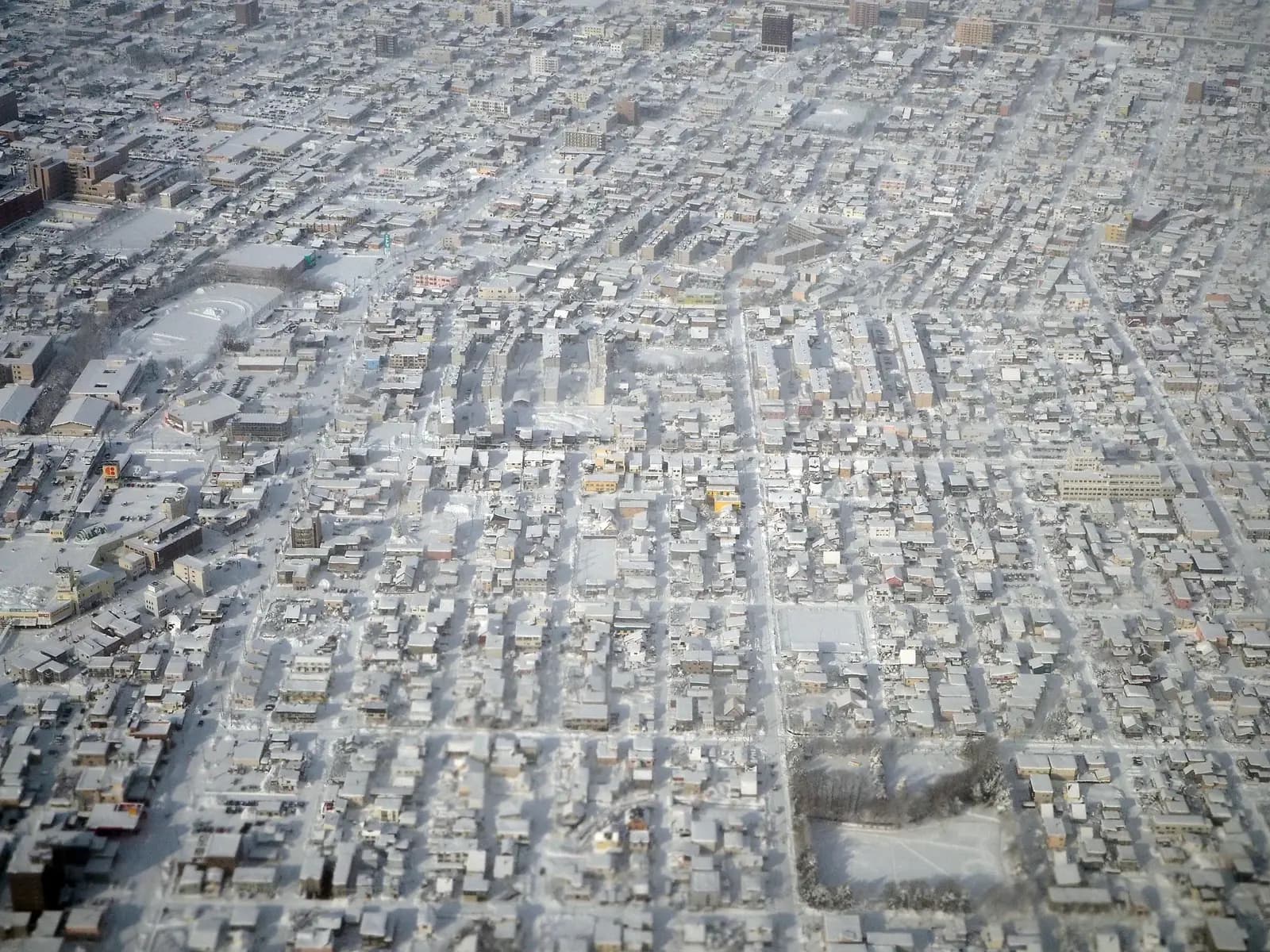
Asahikawa: city sightseeing and onward connections
Consider Asahikawa if you want city meals, a zoo visit and onward travel the next day. A hotel near the station still requires a separate journey to the zoo or airport. On arrival day, allow time to leave your luggage and check closing times before committing to sightseeing.
Furano and Biei: flower fields and countryside
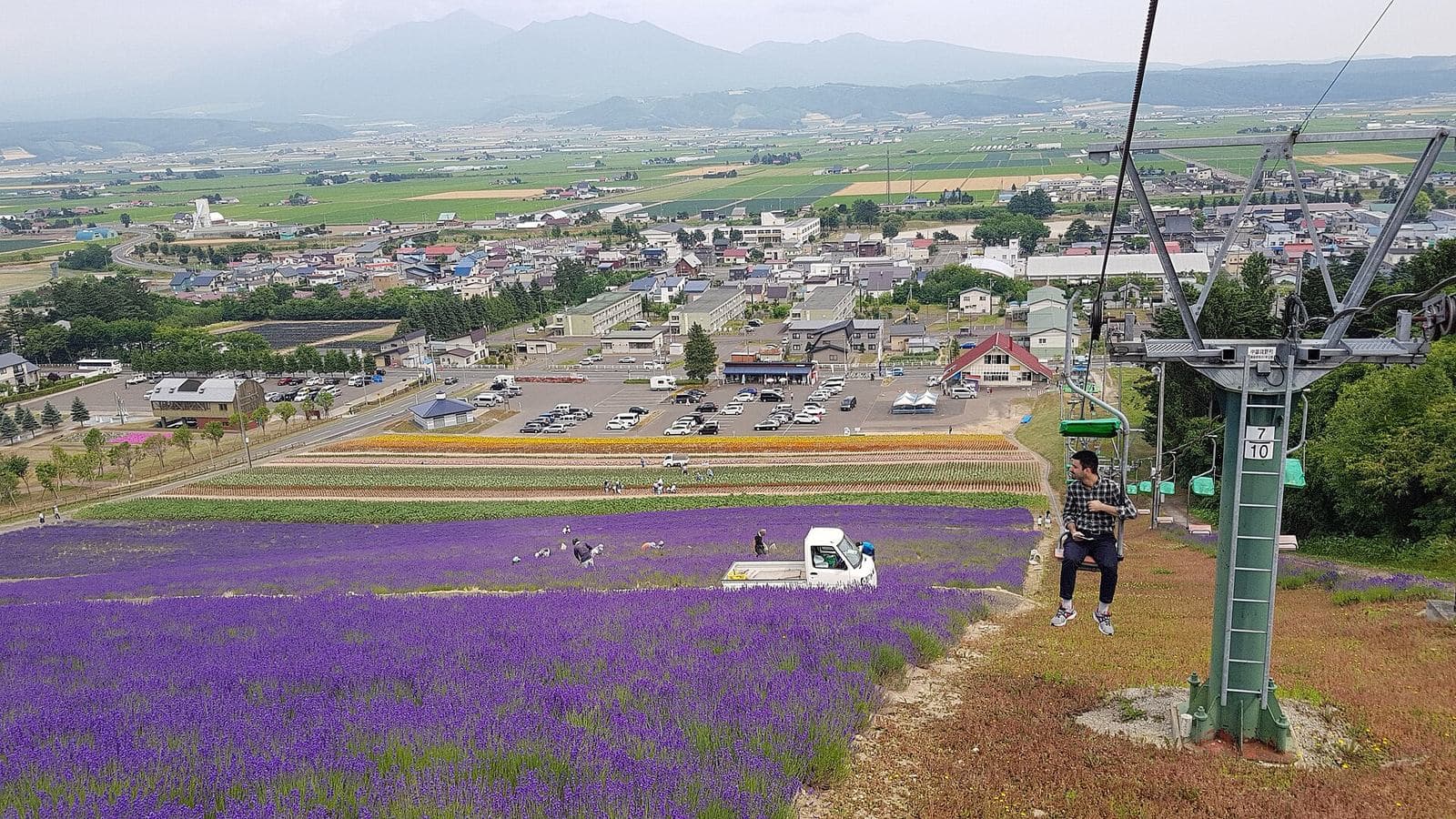
Staying around Furano or Biei can make it easier to plan early starts for flower fields and countryside photography. The stations, farms and Blue Pond are separate destinations. Without a car, choose your stops first and check bus or tour operating dates before choosing accommodation.
Furano and Biei guide: fields, hills and the Blue Pond
Getting to Biei from Asahikawa or Furano
Keep the journey to the station separate from the onward trip to a sight. These are the Biei Tourism Association's approximate travel times. Allow extra time for breaks, traffic and snow when driving, or for waiting and connections when travelling by rail.
Scroll the table horizontally on a small screen.
| Journey | By car | Local train (station to station) |
|---|---|---|
| Asahikawa → Biei | About 26 km / 40 min, Route 237 | About 32 min |
| Furano → Biei | About 34 km / 40 min, Route 237 | About 36 min |
The rail times end at Biei Station. The Blue Pond and flower farms need an onward journey, so check both bus or tour legs before choosing your stops. Biei Tourism Association access guide
Looking for Kamikawa town and Sounkyo?
For Sounkyo Onsen and Kurodake, look at Kamikawa town rather than treating the whole region as one destination. JNTO gives about two hours by Dohoku Bus from Asahikawa Station to Sounkyo. That is a bus-journey estimate, excluding the walk to your hotel and check-in. Check services for your date, including options via Kamikawa Station and the last return departure.
Plan a Sounkyo stay with the Kamikawa town guide → · JNTO Daisetsuzan access · Current timetables from Dohoku Bus (Japanese)
Travel-time sources checked on 15 October 2026. These estimates do not guarantee a timetable or road conditions for your travel date.
Sounkyo or Asahidake: choose the mountain approach first
Plan around Sounkyo for the Kurodake Ropeway, or the Asahidake side for the Asahidake Ropeway. These are separate approaches to Daisetsuzan, not interchangeable stops. Check the road route, bus connections and ropeway operation before trying to combine both in one day.
Without a car, plan around the return connection
Buses from Asahikawa serve parts of Daisetsuzan, but different destinations use different routes. Work out your time on the mountain from the return bus and the last ropeway departure. If you rely on a hotel shuttle, ask whether it needs a separate reservation.
Base choices are NLH editorial suggestions. Official transport guidance: JNTO — Daisetsuzan access (checked 11 October 2026). Confirm actual service dates and timetables with the operators before travelling.
Kamikawa highlights
Furano lavender
Plan around the fields you want to visit, then check their flowering reports before setting your dates.
Biei's patchwork hills
Choose between hill-country stops and the Shirogane Blue Pond, allowing time to travel beyond Biei Station.
Daisetsuzan & Sounkyo
Choose the Asahidake or Sounkyo approach, then check transport and ropeway operation for your date.
Asahikawa ramen & zoo
Allow separate time for city meals and the journey to Asahiyama Zoo; a station-area hotel is not next to the zoo.
The 23 towns of Kamikawa
Click a town to jump to its entry
Asahikawa旭川市
Hokkaido's second city and the gateway to Daisetsuzan National Park. Home of shoyu ramen and Asahiyama Zoo's famously close-up animal enclosures.
Asahikawa town page →Shibetsu士別市
Shibetsu (the Kamikawa one) is Japan's Suffolk sheep capital — lamb pastures on 'Sheep and Cloud Hill' and some of the best mutton dinners anywhere.
Shibetsu town page →Nayoro名寄市
Nayoro grows Japan's best sticky rice, flips to sunflower fields in August, and runs a serious public observatory under dark northern skies.
Nayoro town page →Furano富良野市
Lavender fields in July, powder skiing in January, and wine all year. Furano is the postcard of central Hokkaido — arrive early in summer.
Furano town page →Takasu鷹栖町
Takasu is quietly famous for tomato juice pressed from its own fields — and for sunrise views over the Taisetsu range across the valley.
Takasu town page →Higashikagura東神楽町
Higashikagura holds Asahikawa's airport and a lakeside forest park — the flower-bed-lined gateway to the Furano–Biei corridor.
Higashikagura town page →Toma当麻町
Toma grows Densuke — the jet-black luxury watermelon — and hides a limestone cave park in its wooded hills.
Toma town page →Pippu比布町
Pippu is a strawberry town at the foot of the Taisetsu range, with a friendly local ski hill that trains Asahikawa's kids every winter.
Pippu town page →Aibetsu愛別町
Aibetsu is Hokkaido's mushroom kingdom — shiitake and friends fill its roadside pots of kinoko ramen.
Aibetsu town page →Kamikawa上川町
Kamikawa town holds Sounkyo — Daisetsuzan's great gorge of columnar cliffs, ropeway alpine views, waterfalls and a winter ice festival.
Kamikawa town page →Higashikawa東川町
Higashikawa, 'Town of Photography', sits at the foot of Asahidake — no water mains (everyone drinks Daisetsuzan snowmelt), great furniture workshops, serious cafés.
Higashikawa town page →Biei美瑛町
Patchwork hills, the Blue Pond, and roads that look painted. Biei rewards a rental car and an early alarm clock.
Biei town page →Kamifurano上富良野町
Kamifurano claims the birthplace of Hokkaido lavender and the highest onsen road in the prefecture, climbing the smoking Tokachidake range.
Kamifurano town page →Nakafurano中富良野町
Nakafurano is the actual address of Farm Tomita — the purple heart of Japan's lavender country each July.
Nakafurano town page →Minamifurano南富良野町
Minamifurano wraps around Lake Kanayama — rafting on the Sorachi River, and the little station made famous by the film 'Poppoya'.
Minamifurano town page →Shimukappu占冠村
Home of Tomamu: cloud-sea terraces at dawn, an ice village in winter, and some of the most reliable tree-run skiing on the island.
Shimukappu town page →Wassamu和寒町
Wassamu overwinters its cabbages under the snow — they come out sweet as fruit — in one of the coldest farm valleys in Japan.
Wassamu town page →Kenbuchi剣淵町
Kenbuchi is the 'Picture Book Village' — a library-museum of children's books in the fields, with an annual prize voted by kids.
Kenbuchi town page →Shimokawa下川町
Shimokawa is a forestry town that became a sustainability pioneer — tower-ice climbing in winter, handmade udon and forest walks in summer.
Shimokawa town page →Bifuka美深町
Bifuka farms sturgeon in the north woods — yes, Hokkaido caviar — beside the Teshio River and a high moor of dwarf pines.
Bifuka town page →Otoineppu音威子府村
Otoineppu, Hokkaido's smallest village, is famous for jet-black soba and a high school that turns out woodcraft artists.
Otoineppu town page →Nakagawa中川町
Nakagawa digs ammonites out of its riverbanks — a fossil village on the Teshio with a fine little geology museum.
Nakagawa town page →Horokanai幌加内町
Horokanai is known for soba fields, severe winter cold and Lake Shumarinai, where anglers seek giant itou trout.
Horokanai town page →
Guides that cover Kamikawa
How to ride local buses in Hokkaido: numbered tickets, cash and getting off
For a cash-pay local bus in Hokkaido, check the destination, take a numbered ticket when one is issued, and match it to the fare display before getting off. Do not expect automatic change: prepare coins and ¥1,000 notes before boarding.
Read →
Suica and Kitaca in Hokkaido: top-ups, low balances and refunds
Using an IC card, adding money and getting a refund are different services. In Hokkaido, physical cards and phones may need different top-up equipment. Extra balance cannot make an out-of-area rail journey eligible for IC travel.
Read →
Asahidake Ropeway Without a Car: A Day Trip from Asahikawa
Plan an Asahidake ropeway day trip by bus from Asahikawa, with return connections, the Sugatami walk, mountain safety and a bad-weather fallback.
Read →
Where to Stay in Furano: Town, Ski Base or Flower Country?
Compare Furano town, Kitanomine, Nakafurano, Kamifurano and Biei by season, meals and transport. Choose a base before choosing a hotel.
Read →
Furano and Biei in Winter 2026–27: Skiing, Snow Scenery and the Cold
Plan Furano and Biei in winter with ski-season dates, the Blue Pond, rail-pass options, cold-weather preparation and practical transport choices.
Read →
First Snow in Hokkaido 2026: When Does It Start Snowing?
Compare average first-snow and lasting-snow dates across Hokkaido cities, with 2026 observations and practical advice for transport, clothing and ski plans.
Read →
More guides for this region (29)
- Hokkaido in June: Weather, Clothes and a Five-Day Plan
- Sapporo to Asahikawa: Train or Bus, Times and Fares
- Sapporo to Furano and Biei: Train, Bus or Car
- Asahikawa in Winter 2026–27: Zoo, Winter Festival and the Cold
- Hokkaido in May: Weather, Clothes and Golden Week Planning
- Hokkaido Ski Season 2026–27: Opening Dates Announced So Far
- Hokkaido Winter Festivals 2027: Dates, Overlaps and How to Combine Them
- Hokkaido in Winter Without Skiing: Snow Play, Onsen & Routes
- Hokkaido in March 2027: Weather, Snow, Spring Skiing and Last Drift Ice
- Where to Stay in Asahikawa: Station, Sounkyo or Asahidake?
- Asahiyama Zoo in Winter: 2026–27 Hours and Transport
- Hokkaido in December 2026: Weather, Snow, Skiing and Christmas Lights
- Hokkaido in February 2027: Snow Festivals, Drift Ice and Weather
- Hokkaido in January 2027: Weather, Powder Snow and Drift Ice
- Hokkaido in November 2026: Weather, Snow and Ski Openings
- Hokkaido Rail Pass 2026: Prices, Area Passes and When It Pays Off
- Hokkaido Winter Weather: Temperatures and Snow by Month, and What to Wear
- Hokkaido in Winter 2026–27: Snow Festivals, Drift Ice and Skiing, Month by Month
- Furano & Biei to Noboribetsu Onsen: Train or Car
- Daisetsuzan in Autumn: Chasing Japan's First Fall Colors
- Hokkaido in Autumn: Japan's Fall Colors Start Here
- Hokkaido Driving Times: How to Check Routes from Sapporo and New Chitose
- Best Places to Visit in Hokkaido: Cities, Nature and Onsen
- Furano & Biei Travel Guide: Lavender, Blue Pond and a Two-Day Route
- 10-Day Hokkaido Itinerary: Sapporo, Furano and Shiretoko
- 7-Day Hokkaido Itinerary: Sapporo, Furano and Noboribetsu
- Hokkaido Food Guide: Regional Dishes and Where to Try Them
- Hokkaido in Summer: The Season Japan Keeps to Itself
- How to Plan a Hokkaido Itinerary (Without Trying to See It All)